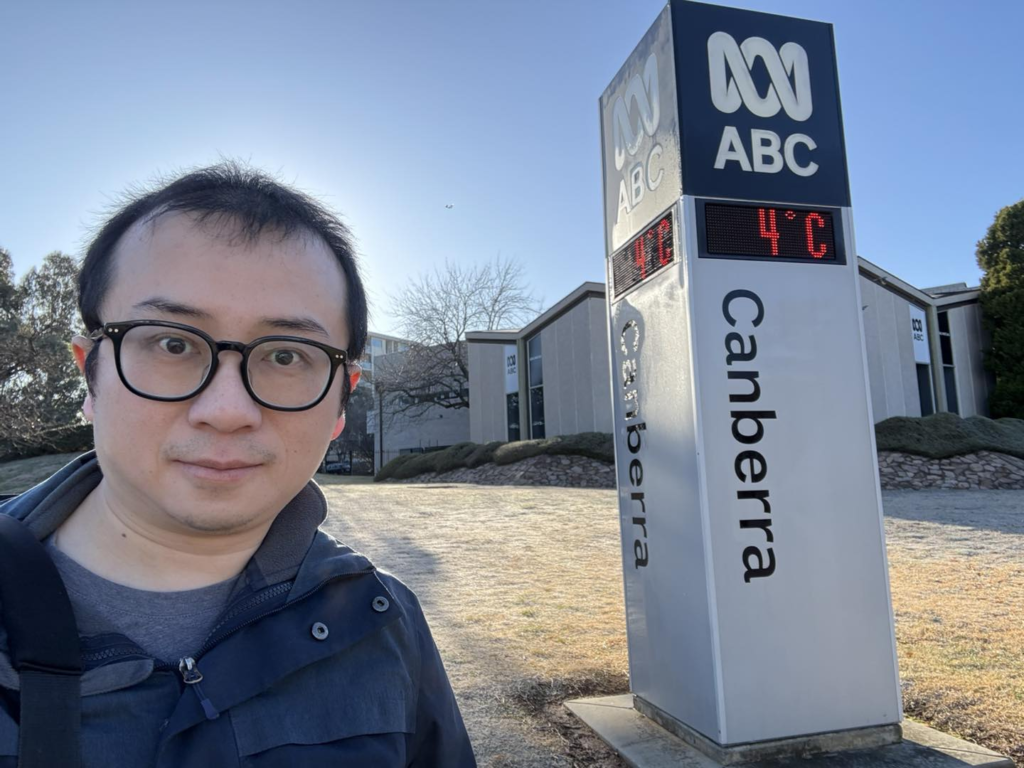
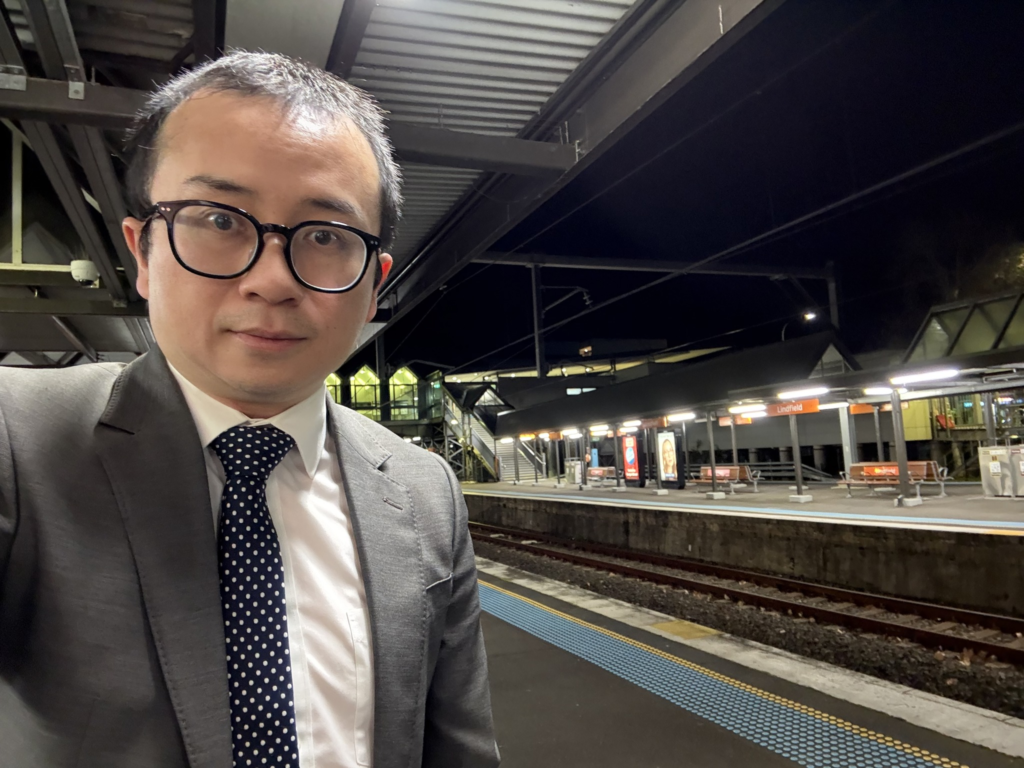
Brrr it’s cold in Canberra. I’m here for the Australian Local Government Association’s annual conference, where we meet Councillors from across Australia, hear updates on matters that affect the local government sector, and also agree on matters to collectively advocate at a federal level.
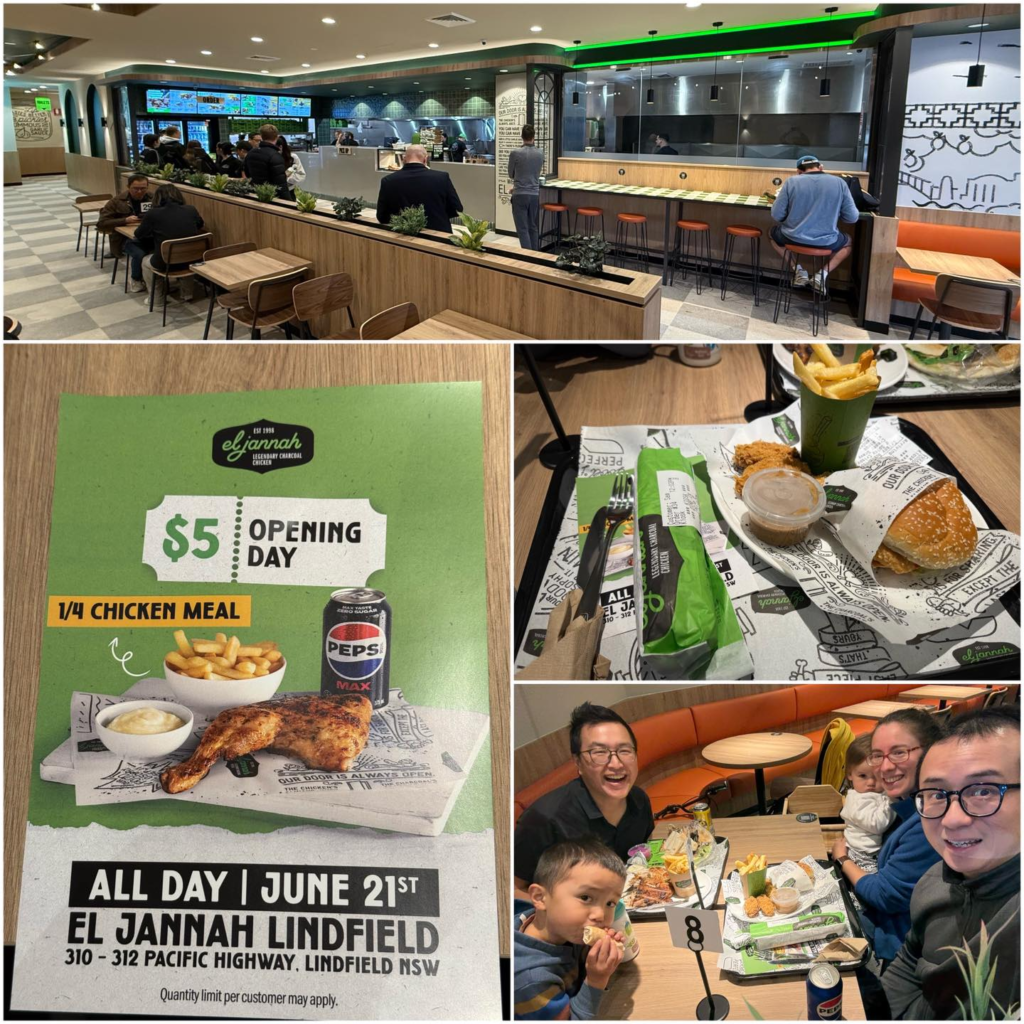
Bumped into friends at the new El Jannah in Lindfield. It has its grand opening on Saturday at 11am with DJ and a special deal, but has the soft opening starting today.
The chicken was nice and crispy, and the gravy was good!
Parked nearby at Coles for the free EV charge though I noticed that there are Chargefox stickers there, and I assume they’ll be commissioned as paid chargers in the coming weeks.
Last year I pondered the limited options for youth participation in policy setting and the democratic process, and at the council meeting of March 2024 we unanimously voted to learn from the practices of youth advisory committees / councils across the Sydney Metro region before setting up our own.
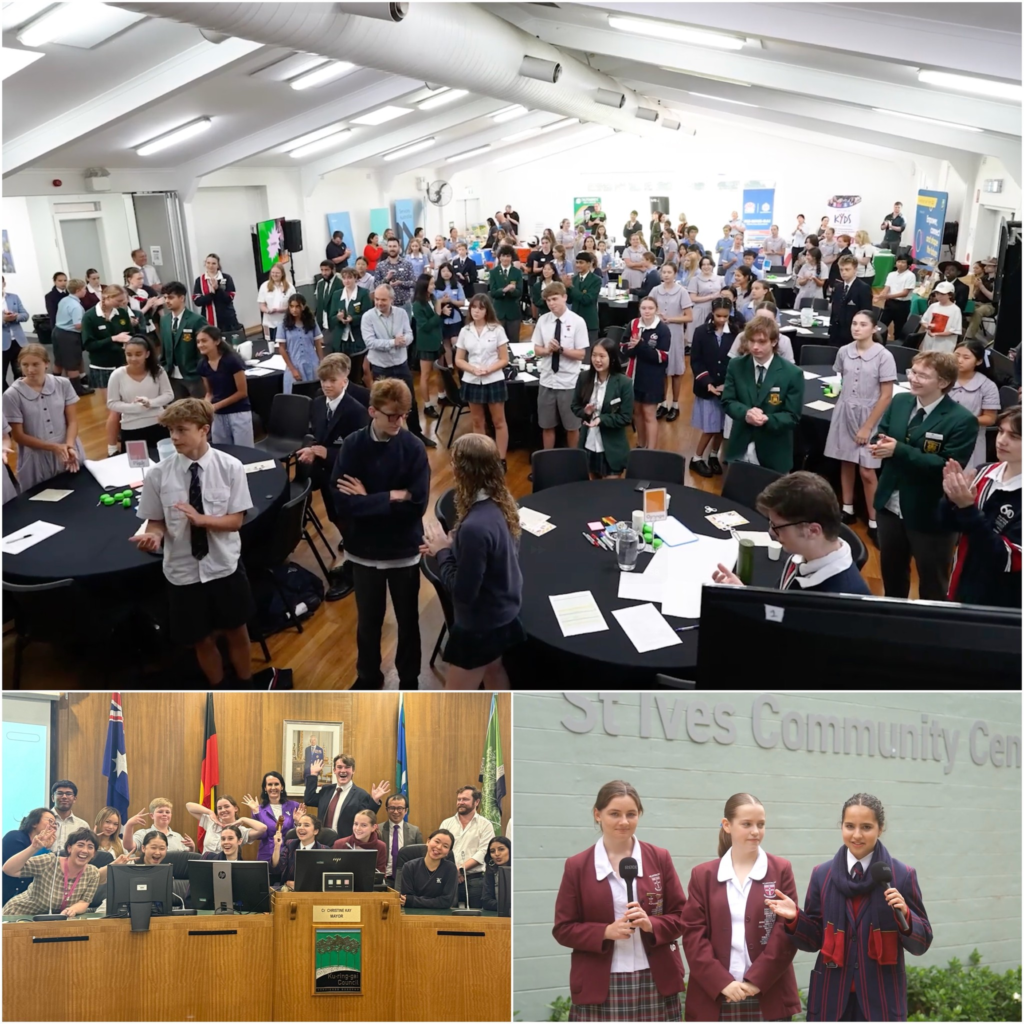
This year it’s been encouraging to see our Youth Advisory Committee get off to a start, in conjunction with youth forums for wider reach. Councillors had the opportunity to visit one of the committee meetings where the youth shared their vision for Ku-ring-gai and a chair was elected.
There isn’t a recording of the committee meeting, but for a glimpse of our recent youth forum visit
Not too much to report this month. Council adopted its Community Strategic Plan and other strategic planning documents, supported a notion to explore better utilising our facilities for arts and culture, created a more diverse composition for the Sydney North Planning Panel, and supported the notion of adding induction cooktops to its energy efficiency rebates program from 1 July 2025.
On a personal note, I’ve got a few things going on last week / this week so haven’t been as active on social media. I’ll reply to most of the resident queries this coming weekend.
Last night council voted unanimously to adopt alternate TOD plans which had been developed then fine-tuned with resident feedback over the last 12 months. Some details have been published today on the council website, and I hope a more user-friendly version of the final map will become available soon.
I want to make a few comments before copy and pasting my short speech below.
1. The role of a councillor is to represent the collective interests of (current and future) residents, ratepayers and the local community. Councillors are required to make considered and well informed decisions, and to do so they need to incorporate a wide variety of datapoints including resident feedback, much of which conflict with each other.
2. No matter what was proposed last night, there was always going to be opposition from hundreds or thousands. Look at the proposal for any one street block and there will be some residents who say it should be taller whilst others will say it should be shorter.
3. Some residents appear to have unrealistic expectations of what councillors can and cannot do. Speaking for myself, I received resident feedback through various channels (email, phone, in person, social media). I summarised these issues and advocated to staff on our residents’ behalf. But not all the issues that I highlighted were addressed, which goes to show that councillors don’t have the power to compel independent staff to make specific recommendations. The other way of getting change is to discuss with the independent councillors and see if there can be agreement to deviate from the staff recommendation, but more often than not the collective support is not there. As such, I know there are issues with the adopted plan but on the whole it is better than the default TOD that is in place today.
4. When viewing council’s proposal, it’s important to compare it with the right baseline. The baseline isn’t council’s plans adopted last decade. The baseline is the State Government’s Transport Oriented Development which is in place today, and which allows buildings to be built with minimal setbacks, almost no tree canopy, and no provision for access to additional shops, amenities, and parks. The baseline also includes the State Government’s Low- and Mid-Rise Housing provisions which allow apartment blocks up to 4-storeys to be built on R2 land within 800m walking distance. It’s very easy for residents to ignore what the State has already put in place last year, and instead to draw comparisons with last decade.
5. The council proposal identifies new parklands and involves rezoning land to support retail and other amenities, making it easier for residents to access what they need without having to drive. The council proposal also involves significant uplift along the highway so that when residents are required to drive, they can do so with less congestion on local roads. Further from the highway, when you pick any specific area and do the numbers you’ll find that the overall density has reduced, allowing for more tree canopy and protection of most HCAs. And with lower density comes less traffic and parking issues.
6. Some councillors or their family members reside in the TOD boundary, and have made appropriate disclosures as such. In these special circumstances, the Office of Local Government actually encourages councillors to remain in the room (so long as they have made their declarations) and vote because if we had to exclude councillors from all planning matters then there wouldn’t be quorum to even run the council meeting. But some residents out there are making inferences that something improper has happened because councillors who have made declarations have followed Office of Local Government guidance and stayed in the room. It’s such a misleading notion. If all the affected councillors had to leave, then we would only have had 4 out of 10 councillors left in the room and there wouldn’t have been enough people to hold a meeting. Plus each councillor or relative affected by the TOD see their property values go down (not up) under this proposal because they live away from the highway, so there’s no reason to believe anything improper has happened. Imagine telling our State MPs that anyone who resides in NSW cannot vote on changes to the hospital system, or Federal MPs that anyone who receives superannuation cannot vote on superannuation changes.
7. We do not yet know how long the State Government will take to assess the proposal before bringing it in law, so we’ll keep you up to date when it happens. And up until 13 June, developers may lodge development applications under the current TOD rules.
8. I know there are some landowners who are not happy with the specific outcome that is proposed for their land. To these landowners, I need to remind them that I have limited influence over the outcome (as per point 3) and they should instead consider lodging a planning proposal.
9. I’ve had residents threaten to throw me out at the next election, and if they wish to participate in the democratic process then they’re more than welcome to do so. Having said that, everything that I’ve done to date is consistent with the objectives and values that I promoted in my electoral material, and it is on that basis that I will continue to act. If there are specific grievances such as not getting the specific outcome that you want, then I refer to point 3 along with the fact that each councillor only has 24 hours in their day, are paid less than the minimum wage, and do not have the ability to provide every single resident with their undivided attention. They don’t have staffers supporting them in responding to the 100+ emails each day, they have families to care for, often with day jobs to supplement the 27k pa, and they cannot be everywhere at once. They carry out their roles at great personal sacrifice and I don’t think it’s appropriate to disrespect them as such.
My speech from last night below
—
Over 12 months of planning and community consultation has gone into what we see today, which is a scenario that vastly improves upon the default TOD and Low- and Mid-Rise Housing controls that were imposed on us last year.
When compared to the default TOD and LMRH in force today, this new scenario does a better job of delivering the required 22,500 additional dwellings while also providing better outcomes for the future residents of Ku-ring-gai. Properties affected by fenceline height transitions greater than 2:1 are reduced by 93%, and the 50% deepsoil requirement in most of our R4 results in a 78% reduction in tree canopy impacts. Around 80% of our HCAs are protected, access to shops is increased from 7 to 43 hectares, and we have identified space for more parks.
This scenario was never going to be perfect. Since 2023 we have argued that serious infrastructure investment is required to support population uplift, but the State has not played ball. The constraints are partially mitigated through this new plan. We have also seen incremental improvements though issues that I’ve flagged such as the feasibility of low shop FSRs, impacts at Shirley Road, and our approach to protecting HCAs aren’t fully address and the resolution remains for another day. I have advocated behind the scenes but also need to respect our consultation and democratic process, and I believe that the motion tonight is the best possible outcome given the constraints. We need to act now, lest we risk further impacts by SSDs.
No matter how we configured it, some resident groups were always going to be dissatisfied. A closer look at outstanding concerns reveals that not all the facts were accurately presented when many signed petitions, with comparisons drawn to Ku-ring-gai’s planning instruments a few years ago rather than the State’s baseline TOD and LMRH in place today.
A regular misconception is that Lindfield and Roseville West have been sacrificed to protect Roseville East but this is simplistic and misleading. In reality the TOD has been expanded beyond 400m with greater deepsoil requirements to protect the future lungs of Sydney while providing a streetscape that reflects Ku-ring-gai’s current R4 and HCA character. Development in Roseville East was also problematic because of the underlying metro tunnel protection zone.
The expanded TOD areas and their tree canopy come with density that is ¾, ½ or even ⅓ of the default TOD, and the dwelling target is made up for with highrise next to the Pacific Highway and train stations – thus minimising traffic on local streets. And this can be seen in the stats.
For the residents of Roseville West such as Shirley, Bromborough and Ontario, this scenario provides a 13% or 150 dwelling reduction as compared to today’s default TOD and LMRH, thus reducing the burden on Shirley x Pacific.
For the residents of Roseville South such as Larkin, Maclaurin and Pockley, this scenario provides a 34% or 700 dwelling reduction. In conjunction with a future roadway, it reduces the burden on Maclaurin x Pacific when compared to the State’s default TOD.
For the residents of the Blenheim HCA and surrounds, this scenario provides a 60% or 600 dwelling reduction. The dwelling target is made up for by providing greater density at Pacific Highway and Wolseley, as well as the FSRs of 5:1 further south on the highway. The R4 backing onto HCA fenceline is also consistent with council’s approach of Moree backing onto St Johns, Victoria backing onto Bancroft, and Lindel backing onto Frances. We have internally explored these at length and the DCP mentioned in points E and F will provide further transition safeguards.
Heritage item status is explored in points C and D.
While some councillors or relatives reside in the proposed TOD, clauses 4.36, 4.37 and 5.20 of the OLG’s model code of conduct encourages participation in this vote. For each councillor the staff-recommended proposal is negative value compared to the default TOD, so by supporting our planning principles they are voting to destroy not line their pockets.
Ku-ring-gai has sought to move as quickly as possible while refining the plan through multiple rounds of consultation. I see our council staff and councillors being attacked for this proposal but I think it is poor form, akin to attacking emergency services who could only protect 7 out of 10 homes in a bushfire. The behaviour that I’ve seen in recent weeks is inappropriate and must stop. I move that we proceed with this revised TOD, then further review as the situation develops.